Advocacy
40 mins
Campaign Comms III: Perfecting your messaging

- Abstract:
- This course sets some basic principles of Campaign Communications. It explores how you can influence the attitude of people so that they move closer towards your world vision. Or to put it another way, how we can change hearts and minds.
- About this course:
- This course focuses on elements of campaign communications that are additional to the ones seen in the previous course Campaign Comms II.
- What do I learn:
- This course will provide you with insights into how biases can distort your message and how you can avoid this, or make the best of it. It will also teach you some tricks and tactics that can make or break your campaign. It will also show you why and how to test your message before you roll it out.
- What do I need to know:
- This course is for people who ideally have already completed the previous 2 courses of this series on Campaign Comms. It builds on elements seen previously, though it can also be taken as a stand alone, by people who are already very confident in how to frame a campaign message.
Trainers

Joel Bedos
Joel is one of the main driving forces behind the SOGI campaign resource hub on public campaigning. He currently sits on the board of the organisation that set up the International Day Against Homophobia, Transphobia and Biphobia in 2004. Joel has developed the SOGI campaign project out of his years of experience on campaigning on LGBTI issues, but also before, as he has worked 20 years for various NGOs working on international solidarity.
- 1.1 Introduction to the course1.2 My frames are perfect...but do they work?1.3 What to test1.4 Quiz: What to test1.5 Testing methodologies1.6 Testing metaphors1.7 Quiz: Choosing metaphors1.8 Case study: Testing in practice in Slovenia1.9 Limitations of testing
- 2.1 Humans are full of biases. For better or for worse?2.2 Conformity effect2.3 Bias of concern2.4 Status quo bias2.5 Bias of association2.6 Bias summary
- 3.1 Secret weapons: Tactics for comms3.2 Stay on track3.3 Don't think of an elephant3.4 Model change journey3.5 Come in hiding3.6 Priming3.7 Foot in the door effect3.8 Door in the face effect3.9 Reciprocity effect3.10 Avoid internal dissent3.11 Acknowledge your opponents3.12 Compensate for the cost of change3.13 Talk about solutions3.14 Be coherent in words and actions
- 4.1 Wrap up video
Related courses
 CUNY Brooklyn College
90 mins
CUNY Brooklyn College
40 mins
 Greenpeace Mob Lab
40 mins
Greenpeace Mob Lab
Suggested reading

Blog
Building Capacity for Monitoring & Documenting Human Rights Violations
The purpose of this assessment is to evaluate the efficacy of strategies used by HRPs/HRMOs for communicating during blackouts. The goal of this project envisages to see a ZimbabweanCivilSociety that is prepared to document and monitor human rights violations without hiccups during internet shutdowns.

Blog
Advocacy Assembly Internet Shutdown Academy: Creative Strategies to Fight Back
Internet shutdowns are occurring increasingly globally, posing significant threats to freedom of expression, access to information & economic growth. These shutdowns manifest in various forms through different technical measures & are implemented by governments in various circumstances. Responding to this threat of internet shutdowns, Advocacy Assembly designed the Internet Shutdown Academy, a set of 10 full online courses in 7 languages!

Blog
Evaluating the Efficacy of State-Imposed Telecom Shutdowns in Northwest Nigeria
This article casts doubt on the shutdowns' effectiveness in curbing banditry, exposing alternative explanations for any temporary decrease in attacks. It questions the legitimacy of justifying these shutdowns as effective counter-terrorism measures, advocating for alternative approaches that prioritize community engagement, human rights, and development initiatives to address the root causes of insecurity and foster lasting peace in Northwestern Nigeria and Nigeria at large.

Blog
Impact of the Twitter Ban in Nigeria
This post is a research study on the impact of the Twitter ban in Nigeria on Human Rights Monitoring, Advocacy and Creativity. Read more.

Blog
Four Free Toolkits to Fight Internet Shutdowns
Let’s tell you a little bit more about each toolkit!
Blog
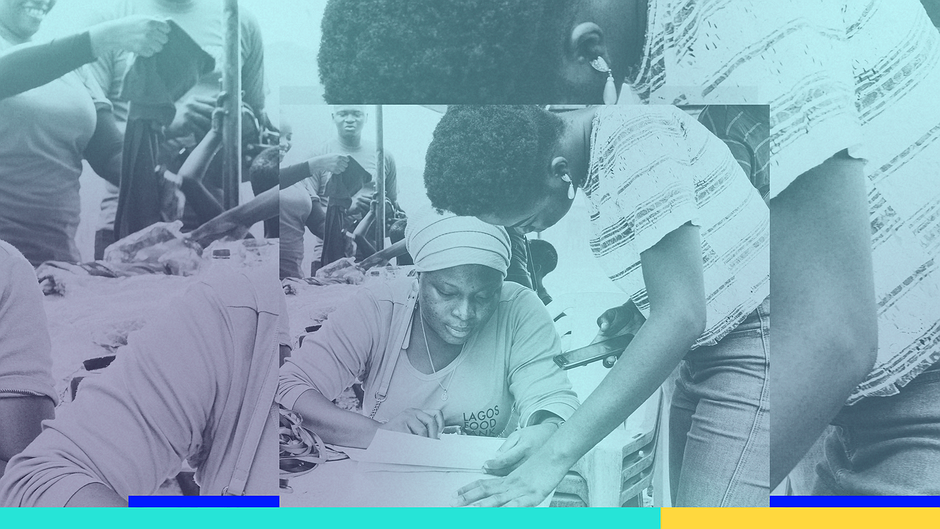
The Impact of Internet Disruptions on Farmers in Nigeria
In Nigeria’s Northwestern Sokoto State, farm workers grapple with geopolitical challenges, shifting climate realities, and economic turbulence. However, they now face a new, growing threat: a troubling rise in internet disruptions, which threatens their ability to work in an increasingly digitally connected world. Read more.